Alvis Hernandez
In Venezuela, a group of young people from all over the country, including students, activists, community leaders, pacifists and human rights defenders, care deeply about the future of the country. They, like many others, have directly experienced the precarious conditions of education in Venezuela: deteriorated classrooms, lack of resources, underpaid teachers, among others.
According to the report published by the Venezuelan Finance Observatory (OVF), the basic food basket in Venezuela, calculated for a family of five people, reached $571.54 US dollars in June 2023. This value reflects the cost necessary to cover food and essential products for the sustenance of a family in the country.
It is important to highlight that this figure contrasts significantly with the current minimum wage in Venezuela: 130 bolivars per month. This amount is equivalent to approximately $4.62 US dollars, according to the current exchange rate.
This disparity between the cost of the basic basket and the minimum wage reflects the economic difficulties that Venezuelan citizens face in accessing food and satisfying their basic needs. The imbalance between product prices and disposable income represents a significant challenge for the population, since it makes it difficult to acquire food and puts the well-being of families at risk.
In the midst of this context, these brave and passionate young people decided to raise their voices and become the protagonists of the change they longed for. They met in small groups and used a website as their main strategy. They created a nonviolent campaign called “Online Complaint,” with the idea of collecting information about the lack of access to quality education for young people and the injustice in the payment of salaries to teachers. What is sought is to raise awareness, pressure the authorities and promote changes that guarantee quality education and fair remuneration for teachers, in a participatory and nonviolent way.
With wit and creativity, these young people told moving stories about their educational experience. They posted photographs of worn-out classrooms, showed deteriorated textbooks and shared testimonies of teachers who strived to teach despite limitations, it is important to note that many of them face additional challenges. One of these challenges is the limitation on the frequency of classes they can teach. Due to their low income, some teachers are forced to teach only two days a week.
This reality is due to the fact that the income they receive does not allow them to cover the logistical expenses necessary to get to the educational center, such as transportation and food. The lack of economic resources hinders their mobility and regular access to schools, high schools and universities, which negatively impacts the quality and continuity of the education they can provide to students.
Through emotional videos and powerful messages, the young people managed to illustrate the reality of Venezuelan education and how it directly affects each student. The main strategy was to promote collective participation and empower young people to make their voices heard, expressing themselves freely and anonymously.
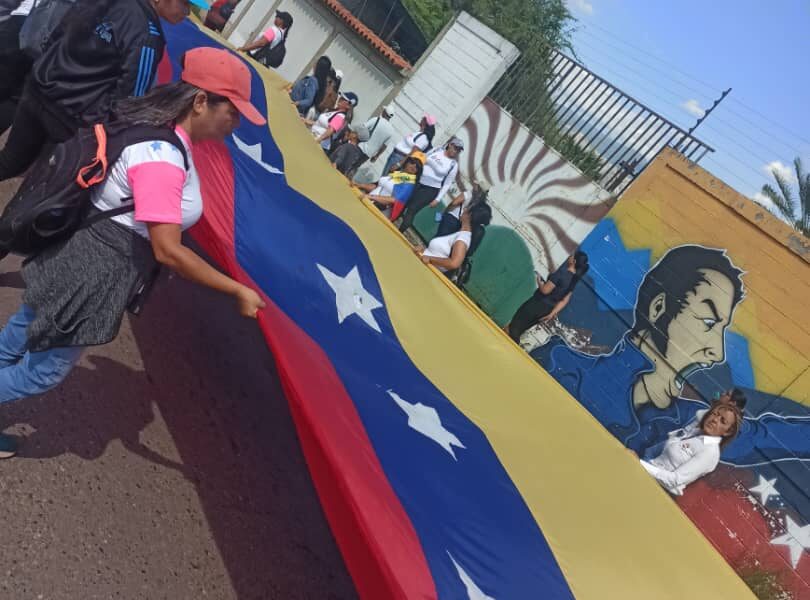
These young people also joined together in a strategy of peaceful pressure, organizing marches and demonstrations throughout the country, carrying colorful banners and inspiring messages. Their focus was clear: they wanted their voices to resonate in every corner of Venezuela and for the authorities to understand that education was an undisputed priority.
As their movement grew, young people also implemented citizen participation techniques. Student assemblies were organized in schools and universities where proposals to improve the educational system were discussed. These assemblies served as spaces for open dialogue for young people to express their ideas and contribute to the construction of concrete solutions.
The nonviolent campaign carried out by these young Venezuelans is an example of courage and perseverance. Through peaceful pressure and citizen participation, young people managed to capture the attention of society and the authorities. The final objective is to achieve a restructuring of the educational system so that present and future generations can enjoy quality education and transform the history of Venezuela. Although their path is full of challenges and obstacles, these young people do not lose hope. Their nonviolent struggle became an inspirational story and a call to action. As time passed, more young people joined their cause, strengthening the movement and increasing its influence in society.
The joint struggle of young people and teachers is a powerful testimony of solidarity and resistance. Together they managed to raise awareness and pressure the authorities to take concrete measures in favor of education in Venezuela.
Despite not having obtained tangible results so far, these young people demonstrate great determination and passion to change the situation in their country. Whose perseverance reflects their deep commitment to justice, human rights and the well-being of their society.
Text published on July 19, 2023 with the support of FES
Alvis Hernandez
Passionate about human rights and social justice. Believer in the power of youth to generate positive change in the world
Translated by Damian Vasquez