Jeffrey D. Pugh
We often hear how important training and capacity development is to achieve change, especially in peacebuilding. In the field of international assistance to promote peace and nonviolence, it is common to support local actors with workshops and training programs as a form of solidarity. However, the assumption that the mere accumulation of knowledge will contribute to conflict resolution is erroneous.
In this article I present the catalytic network model, which focuses on various factors that must be taken into account when conducting training and education programs on peace and nonviolence. To exemplify this model I rely on the analysis of the strategic nonviolent action training programs implemented between 2018 and 2020 in Quito, Ecuador, by the Regional Institute for the Study and Practice of Nonviolent Action in the Americas. The catalytic network that I developed is based on various factors that are key for changes to occur, such as access to information for participants, the construction of networks that allow creating solid relationships between them, and the availability of resources so that this knowledge can be implemented and lead to a change in behavior.
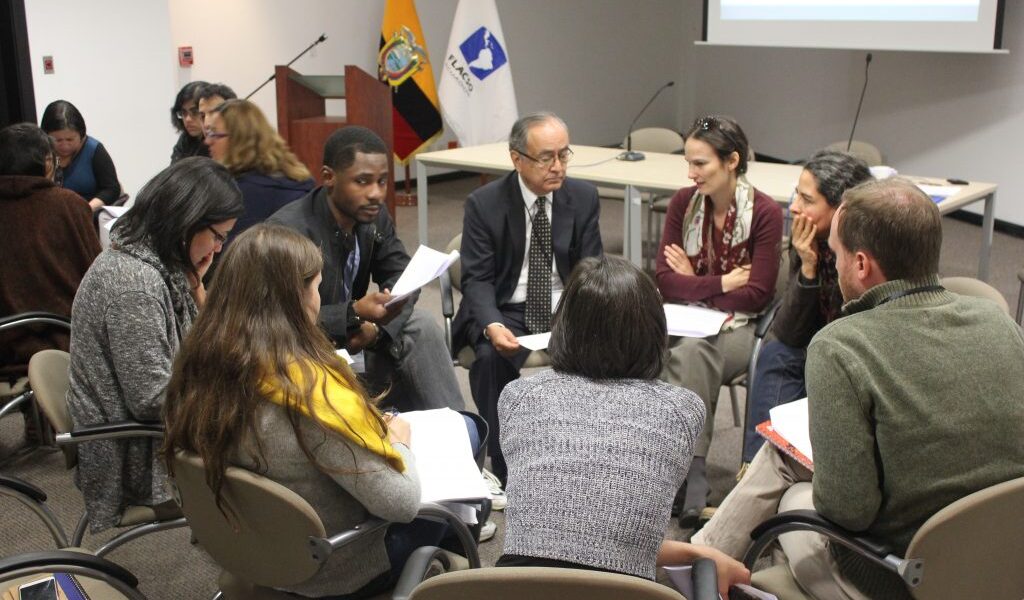
To implement this model, five aspects are essential. The first is the selection process of the participants. This process implies that the training program seeks alliances with key organizations in the community, which can provide references of people integrated into their communities and who can cause a great impact after the training due to their membership in central nodes, such as faith communities, union cooperatives or ethnic associations. Being part of these nodes helps ensure that future knowledge can be used by other people who are in that network. This approach with specific organizations must be accompanied by interviews with participants and recommendations to provide information about the possible connections that the participant has with other organizations. In the case study, the organizers of the Regional Institute conducted Skype interviews and classified participants according to their experience, motivation, potential impact, influence on marginalized communities, and other criteria.
A second aspect is relationship building. Training in a foreign country can forge unique bonds between groups of participants, even more so if they are of different nationalities, ethnicities, ages and origins than the majority of people in their social environment. An international exchange contributes to the understanding and development of empathy for other cultures and can be a mechanism to create transnational social capital, which can fill “structural holes” in their networks to foster international ties and maintain relationships with them in the long term. . The importance of this was reflected in the survey conducted with the participants of the Regional Institute in 2018, where they indicated that the diversity of participants was the main success factor in their learning.
A third aspect is maintaining relationships. In order for links to be maintained actively and intentionally between participants, it is necessary to create spaces that contribute to this end: subsequent meetings, alumni newsletters or the creation of groups on various social networks that allow them to maintain contact. During the training courses, the Regional Institute encouraged interaction between participants through various group dynamics, holding group meals and an excursion. For these relationships to be maintained over time, it is important that the organization establishes and implements work group spaces after the course, where alumni can share their local learning and the challenges they face according to each of their realities. This space thus becomes a laboratory where they can jointly solve problems and propose strategies. To this end, the Regional Institute encouraged the creation of groups on social networks such as Facebook and WhatsApp, the exchange of emails and the participation of alumni in specific projects in each country.
A fourth aspect is the establishment of seed funds that encourage the practical implementation of projects by its participants after the program. When financial support is not possible, programs can subsidize membership in professional associations, help participants publish articles in the media, and highlight their work in newsletters or podcasts. Another way is through the guidance that can be given to participants in the design of plans or proposals for practical actions to implement in their respective countries. These can form the basis of subsequent funding requests to turn an idea into a viable peacebuilding initiative. Regional Institute staff and facilitators helped connect participants with key organizations and contacts to help them increase the reach of their messages or expand their initiatives, while program participants helped recruit promising activists into their network. for the following year’s cohort—in fact, former participants were the most frequent source cited by second-year participants where they had heard about the program. Competitive funding opportunities from one of the sponsoring organizations for follow-up training and research initiatives helped seed the development of concrete actions at home.
Finally, the evaluation of results is very important because it estimates not only the increase in theoretical knowledge, but also considers essential elements such as the development of personal capabilities and professional development that reflect changes in attitude, new sources of inspiration and motivation in the participants, the increase in their social capital, the presentation or planning of future projects and the development of products that make visible what they have learned, for example, through publications, interviews or newsletters. This change was possible to verify in the evaluation carried out by the Regional Institute where the participants mentioned that there was an increase in their self-declared level of knowledge about nonviolent action from 2.9 before the course to 4.4 after, on a scale of 1 to 5. Furthermore, In a survey conducted a year later, twelve respondents declared having participated—after their training at the Regional Institute—in 57 nonviolent campaigns, having facilitated 48 trainings and 51 nonviolent action classes. On the other hand, 79% of those surveyed stated that they had used what they learned to put these activities into practice. The new projects and expanded voices demonstrated here were complemented by greater social capital and motivation. Respondents reported maintaining contact with an average of twelve participants after the program, and half chose the highest frequency option provided in the survey—they communicated more than 21 times with other participants after the program. The transfer of knowledge had important diffusion effects: 79% of respondents reported having shared what they learned with people who participated in the same civil resistance movement. On the other hand, 85% also indicated that the community of people formed through their participation in the program contributed to these specific results by inspiring them and providing them with moral support, and 79% responded that it increased the channels of dissemination of the results. messages. Finally, coordination within the region and within the Americas doubled, while in the city, the country and other parts of the world it increased by 50%.
The importance of these factors based on the experiences of peace and nonviolence training programs extends to other programs beyond the Regional Institute. Its general relevance was reaffirmed by a survey conducted in 2017 with directors of such peace and nonviolence training programs. Of that group, two-thirds had previously participated in an international education program focused on peace and conflict, and 80% found the contacts and networks created through the previous program to be relevant to facilitating their work in their current program. Participants valued the networks and contacts they made because it contributed to increasing their social capital and carrying out their nonviolent action work.
It is worth mentioning potential security risks and exposure as networks become broader and more diffuse, as well as fading interest and the lack of a central organizational infrastructure or, where such an organization exists, the guarantee of democratic participation of all members of the network are latent challenges in the training processes. For this reason, it is important that future training designers and policy makers as well as funders keep in mind that ordered evaluation results that fit a one-year project cycle may not be the best way to maximize the power of capacity building, and that investing in relationships and networks over time can lead to greater impact so that participants can build peace and achieve social change in their home countries and communities.
Jeffrey D. Pugh
He is an adjunct professor of conflict resolution at the University of Massachusetts, Boston (United States). He is the founder and executive director of the Center for Mediation, Peace and Conflict Resolution of Quito, Ecuador.
This article is derived from a longer article, originally published in the academic journal Journal of Peacebuilding and Development (2020): A Catalyst for Action: Training and Education as Networking Platforms for Peace Projects.
Translated by Caroline Gomes
Published: January 20, 2023