Maria Clara Zeballos
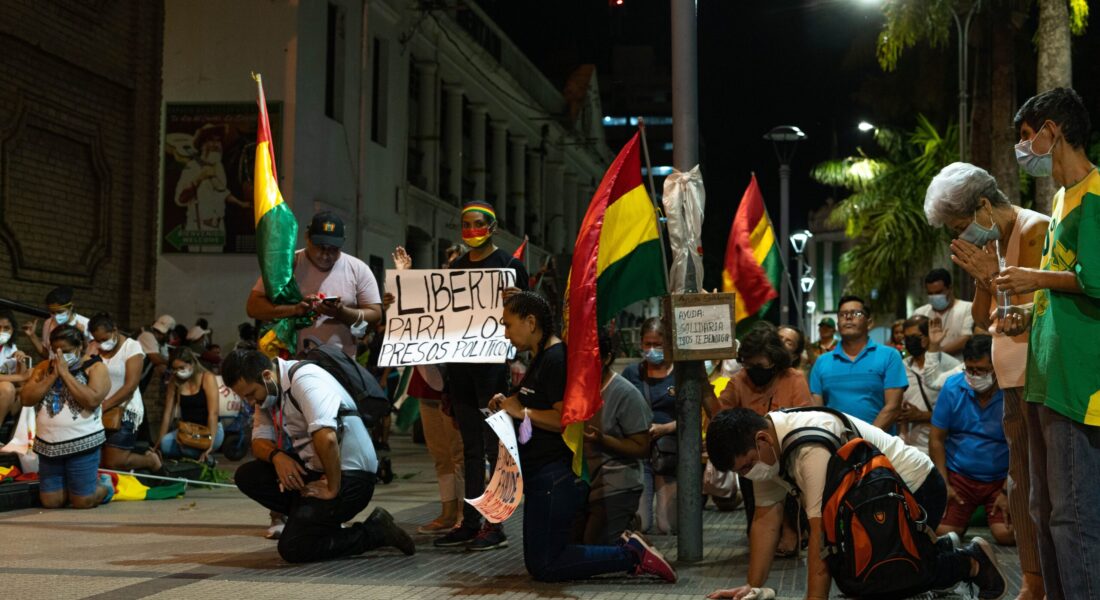
In 2019, Bolivia faced an electoral conflict that generated widespread discontent and massive mobilization of the population, but the Bolivian government, in addition to resorting to police repression and direct threats, also used tactics to demobilize protesters. One of them was the infiltration of agents into digital social networks and public spaces. The objective was to generate psychological pressure, sow distrust and create a climate of danger that would make people abandon their active participation.
To facilitate the organization, the Protestants opened WhatsApp groups whose links circulated publicly on Facebook. This facilitated the introduction of infiltrators who spied on the conversations and had complete access to the movements that were planned. Access to the participants’ phone numbers allowed the infiltrators to carry out the following actions:
Confusing the meeting points: through telephone calls they communicated with the participants and falsely informed them that the meeting points had been changed, changing places and times of the meetings and marches. This strategy generated chaos and made it difficult to organize protests.
Delegitimize the mobilization: the infiltrators communicated with the participants and, posing as protesters, asked them for information about payments and rewards for going to the marches. The purpose was to seek statements to propagate the idea that it was a movement driven by economic interests and not by legitimate causes.
Threats to the family: through telephone calls they warned the participants that they knew about the activities of their loved ones. For example, they mentioned details such as the color of the car they used or even the school their grandchildren attended. These threats sought to intimidate and instill fear of reprisals against their families. The infiltrators obtained the data when they entered personal profiles on social networks through phone numbers.
On the streets, these agents camouflaged themselves as neighbors or sympathizers committed to the cause, taking advantage of the lack of knowledge among the protesters to carry out political actions. Its objective was to demobilize the Protestants:
Dismantling of blockade points: the infiltrators approached the blockade points to present themselves as neighbors or people in solidarity with the cause. Then, they falsely announced the arrival of violent groups that would supposedly arrive to unblock the road or, on the other hand, they said that attacks were taking place on other nearby groups. This had an immediate effect: people retreated, hid, or even some brave people came to the defense of their neighbors. By repeating this strategy at several points, simultaneously, the infiltrators managed to dismantle several concentrations of protesters.
Monitoring of meetings and collection of direct information: at a planning meeting in the neighborhood square, a young woman approached and began asking for the group’s WhatsApp link, arguing that she had left one because there were infiltrators. Then, he began to approach each participant to ask for the phone number of the group administrator. Afterwards, a man approached who had the strategy of joining the people gathered, moving among them, trying to make the rest believe that he was known to those present. They sought to obtain information about who the leaders were and what activities were being planned.
Dissemination of attacks suffered by protesters: infiltrators spread rumors about attacks suffered by other participants at their blocking points. This spread in the meetings held in the square. On one occasion the story arose of “a neighbor’s neighbor” who had been attacked during a blockade by people who cut off her hand — and that is why she did not want to go out again. This “news” increased the feeling of fear and danger.
Agent provocateurs at pro-government or anti-blockade rallies: Infiltration tactics were used at demonstrations in support of the government to create chaos and escalate confrontation with anti-government protesters. In a rural blockade of farmers who supported the government, when the situation became violent with the use of weapons towards a caravan of miners, the community members, through videos, denounced the presence of unknown individuals. To confirm it, they said to each other, “Ask them what the name of this place is, they won’t know.” In Cochabamba, the transporters who were against the blockades stated that along the route of their march, groups of unknown individuals unexpectedly entered some corners to start confrontations and attack those who were blocking against the government.
But, on the other hand, the protesters developed nonviolent strategies to reduce the risk posed by the presence of infiltrators:
Getting to know neighbors: To increase trust and foster close relationships, neighbors created WhatsApp groups with those who regularly attended meetings. Other recreational activities allowed neighbors to get to know each other physically and establish stronger ties between them.
Encourage anonymous participation: Neighbors were encouraged to speak out anonymously, recognizing that many were afraid of being identified. Every night, the housewives went out to make noise with pots in the “cacerolazo.” This practice allowed people to express themselves anonymously, giving them a safe space to protest. In addition, he left with drums and songs so that people would look out their windows to express their support. Little by little people began to attend the neighborhood marches.
Remember the cause of the protest: another function of the marches, the cacerolazo and other demonstrations was to become symbols to remind society of the cause that motivated the mobilization and their daily repetition helped prevent them from being forgotten.
Inclusion of vulnerable groups: activities were designed to take into account the needs and conditions of the most vulnerable groups such as children and grandparents. The idea was for them to participate in the protest in a peaceful and festive manner, without putting themselves in danger.
Question the infiltrators about details of the neighborhood: when an individual was suspected at the blockade points, the women asked questions about the origin and specific details of the neighborhood such as the names of the streets, squares, and neighborhood stores.
Find someone who can attest to the person’s identity: in one specific case, the infiltrator did not know that the representative of the area to which he said he belonged was present at the meeting and said that they never saw the leader in any activity. This experience helped apply the same tactic in other situations.
Ask for the cell phone number: a colleague in charge of registering the list for the night vigil thought of requesting the cell phone number of a suspect and in front of him called that number. Seeing that the call did not connect to the registered phone, the infiltrator became nervous and fled down the street.
But, it is also important to note that there are aspects of the organization of the protest that increase the risk of danger:
Absence of a planned organization: the lack of a clear organizational structure caused multiple factions and fragmented leaderships to emerge, each opening their WhatsApp groups—causing disorientation in the participants. Additionally, some administrators exercised excessive control over members’ behavior, even accusing those who expressed divergent opinions or proposed different ideas as infiltrators. This added to the general paranoia among Protestants.
Membership in multiple WhatsApp groups: Membership in several WhatsApp groups such as family, friends, coworkers, and a neighborhood protest group is common. This situation facilitated the rapid spread of rumors and false information, since messages traveled from group to group, even between different cities, increasing the risk of being manipulated by the information introduced by infiltrators.
Conclusions
The tactics of the infiltrators sought to undermine the legitimacy of the protests, increase confrontation and generate division within the protest movements, putting at risk the active participation of citizens in the defense of their rights and demands. However, the protesters developed nonviolent strategies to reduce the risk and maintain the integrity of their movement, although it remains to develop strategies that strengthen the organization and foster a culture of trust and cooperation with the purpose of protecting the integrity of the protests and guaranteeing that the infiltrators do not undermine the objectives of the movement.
—
Published on September 13, 2023 *This text is part of a field diary that the author kept during the October 2019 demonstrations in the city of La Paz, Bolivia.
Maria Clara Zeballos
Social anthropologist dedicated to the study and analysis of the social dynamics of conflicts in Bolivia. He completed a thesis for the Master’s Degree in Critical Theory for the Universidad Mayor de San Andrés on alliances between social organizations in protests.
Translated by Damian Vasquez