
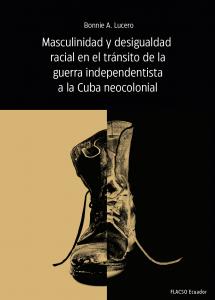
Masculinidad y desigualdad racial en el tránsito de la guerra independentista a la Cuba neocolonial
Sinopsis
Los estudios sobre los hombres y las masculinidades en Cuba, y en general en América Latina, han visualizado sistemáticamente al sector hegemónico representado por hombres blancos, citadinos y heterosexuales. La presente investigación de Bonnie A. Lucero es exhaustiva en la búsqueda de archivos para establecer otras masculinidades haciendo énfasis en las racializadas y sus cambios en diferentes momentos históricos de los siglos XIX y XX.
En su búsqueda sobresalen varios archivos de la zona central del país, muy poco visibilizados en estudios anteriores.
Patriarcado, honor racial, el hombre nuevo y los epítetos discriminatorios acompañaron el proceso de la naciente república en el inicio del siglo XX. El lugar que debían ocupar los hombres negros y mestizos no podía ser el mismo que en la etapa previa; en esta investigación se establecen las pautas para revisar tal recorrido. Y aunque en este libro se habla del pasado, su autora mantiene un diálogo permanente con el presente para alertar cómo se construyen los procesos machistas y racistas.
Julio César González Pagés
Coordinador General de la Red Iberoamericana y Africana de Masculinidades (RIAM)
Bonnie A. Lucero. Tiene un doctorado en Historia de la University of North Carolina-Chapel Hill, una maestría en Estudios Latinoamericanos de la Cambridge University y una licenciatura en Relaciones Internacionales y Español de la University of the Pacific. Ocupa la Cátedra Neville G. Penrose de Historia y Estudios Latinoamericanos en la Texas Christian University. Es historiadora de América Latina y del Caribe. Investiga sobre las raíces históricas de la desigualdad racial, de género y de clase en Cuba desde la época colonial. Sus monografías incluyen A Cuban City, Segregated: Race and Urbanization in the Nineteenth Century (2019) y Race and Reproduction in Cuba (2022). También es coeditora de Voices of Crime: Constructing and Contesting Social Control in Modern Latin America (2016), y autora de numerosos artículos y capítulos sobre la esclavitud, el imperialismo estadounidense, la urbanización y la salud. Con su proyecto actual explora la historia social de la carne de res.
https://orcid.org/0009-0003-3481-9997
Forma de citar: Lucero, Bonnie A. 2025. Masculinidad y desigualdad racial en el tránsito de la guerra independentista a la Cuba neocolonial. Quito: FLACSO Ecuador. https://doi.org/10.46546/2025-68traduccion
Referencias
Academia de la Historia de Cuba. 1948. Archivo de Gonzalo de Quesada. Epistolario, 2 vols. La Habana: Imprenta El Siglo XX.
Atkins, Edwin F. 1926. Sixty Years in Cuba. Cambridge, MA: Riverside Press.
Barnet, Miguel. 1966. Biografía de un cimarrón. La Habana: Ediciones Ariel.
Batrell Oviedo, Ricardo. 1912. Para la historia: Apuntes autobiográficos de la vida de Ricardo Batrell Oviedo. La Habana: Seoane y Alvarez.
Bolton, Horace Wilbert. 1899. History of the Second Regiment Illinois Volunteer Infantry. Chicago: R. R. Donelley & Sons Company.
Boza, Bernabé. 1900. Mi diario de la guerra: desde Baire hasta la intervención americana, 2 vols. La Habana: Imprenta Propagandista.
Bustamante, Luis J. 1931. Diccionario biográfico cienfueguero. Cienfuegos.
Cabrales Nicolarde, Gonzalo. 1996. Epistolario de héroes: cartas y documentos históricos. La Habana: Editorial de Ciencias Sociales.
Castillo y Zúñiga, José Rogelio. 1910. Autobiografía del General. La Habana: Rambla y Bouza.
Chapman, Charles E. 1927. A History of the Cuban Republic: A Study in Hispanic American Politics. Nueva York: Macmillan.
Clark, Victor S. 1902. “Labor Conditions in Cuba”. Bulletin of the Department of Labor 41 (julio): 663-793.
Collazo, Enrique. 1900. Cuba independiente. La Habana: La Moderna Poesía.
Collazo, Enrique. 1912. Cuba heroica. La Habana: Impr. La Mercantil de Suárez, Solana y ca.
Consuegra y Guzmán, Israel. 1930. Mambiserías: episodios de la Guerra de Independencia, 1895-1898. La Habana: Impr. del Ejército.
Dawley Jr., Thomas. 1898-1899. “Campaigning with Gómez”. American Magazine 47 (noviembre de 1898-abril de 1899).
Diamond News Company. 1905. Standard Guide to Cuba. Nueva York: Foster & Reynolds.
Era, Doris, y José Díaz Roque. 1992. Cartas desconocidas de Máximo Gómez a Rita Suárez del Villar. Cienfuegos: Ediciones Mecenas.
Ferrara, Orestes. 1975. Memorias, una mirada sobre tres siglos. La Habana: Ediciones Universal.
Flint, Grover. 1898. Marching with Gómez: A War Correspondent’s Field Note-Book Kept During Four Months with the Cuban Army. Boston: Lamson, Wolffe and Company.
Gómez, Fernando. 1897. La insurrección por dentro: apuntes para la historia. La Habana: M Ruiz y Compañía.
Gómez, Máximo. 1969. Diario de campaña. La Habana: Instituto del Libro.
Gómez, Máximo. 1986. Cartas a Francisco Carrillo. La Habana: Editorial de Ciencias Sociales.
Guerra Alemán, José. 1989. Juro pero no prometo (Biografía del general José Braulio Alemán y otros relatos de la guerra y la paz). México D.F.: Costa-Amic Editores.
Halstead, Murat. 1896. The Story of Cuba: Her Struggles for Liberty; The Cause, Crisis and Destiny of the Pearl of the Antilles. Chicago: National Publishing Co.
Instituto de Geográfico y Estadísticas. 1891. Censo de población de España según el empadronamiento hecho el 31 de diciembre de 1887. Madrid.
Loynaz del Castillo, Enrique. 1989. Memorias de la guerra. La Habana: Editorial de Ciencias Sociales.
Machado, Francisco P. 1917. ¡Piedad! Recuerdos de la Reconcentración. Sagua la Grande: Imprenta de P. Montero.
McIntosh, Burr William. 1899. The Little I Saw of Cuba. Nueva York: F. Tennyson Neely.
Martí, José. 1893. “Mi raza”. Patria, 16 abril.
Martí, José. 1894. “El plato de lentejas”. Patria, 6 enero.
Martínez-Fortún y Foyo, José Andrés. 1959. Anales y efemérides de San Juan de los Remedios y su jurisdicción. La Habana: Editorial Ed. Mimeografiada.
Miró Argenter, José. 1899. Crónicas de la guerra: la campaña de invasión. Santiago de Cuba: Imprenta El Cubano Libre.
Musgrave, George Clarke. 1899. Under Three Flags in Cuba: A Personal Account of the Cuban Insurrection and Spanish-American War. Boston: Little, Brown and Company.
Parker, William Belmont, ed. 1919. Cubans of To-Day. Nueva York: G. P. Putnam’s Sons.
Pepper, Charles M. 1910. To-Morrow in Cuba. Reimpresión, Nueva York: Young People’s Missionary Movement of the United States and Canada.
Piedra Martel, Manuel. 1945. Mis primeros treinta años: memorias, infancia y adolescencia, la guerra de independencia. La Habana: Minerva.
Polavieja y del Castillo, Camilo García de. 1898. Relación documentada de mi política en Cuba: lo que ví, lo que hice, lo que anuncié. Madrid: Imprenta Emilio Minuesa.
Quesada, Gonzalo de, y Henry Davenport Northrop. 1896. The War in Cuba, being a Full Account of her Great Struggle for Freedom, Containing a Complete Record of Spanish Tyranny and Oppression. Chicago: Wabash Publishing House.
Roloff, Carlos. 1901. Índice alfabético y defunciones del Ejército Libertador de Cuba, guerra de independencia, iniciada el 24 de febrero de 1895 y terminada oficialmente. La Habana: Imprenta de Rambla y Bouza.
Rosell y Malpica, Eduardo. 1977. Diario del teniente Eduardo Rosell y Malpica (1895-1897), 2 vols. La Habana: Academia de Historia.
Rousseau, Pablo L., y Pablo Díaz de Villegas. 1920. Memoria descriptiva, historia y biográfica de Cienfuegos y las fiestas del primer centenario de la fundación de esta ciudad. La Habana: Establecimiento tipográfico “El siglo XX”.
Rowland, Dunbar, ed. 1907. Mississippi: Contemporary Biography, 3 vols. Atlanta: Southern Historical Publication Association.
Sanjenis, Avelino. 1900. Mis cartas: memorias de la revolución de 1895 por la independencia de Cuba. Sagua la Grande: Imprenta “El Comercio”.
Tejera, Vicente. (1897) 1992. “La indolencia cubana. Conferencia dada a los obreros cubanos emigrados durante la última guerra de independencia, en la ‘Sociedad de Trabajadores de Key West’, 12 de diciembre de 1897”. Cuba Contemporánea 28 (3): 169-77.
Third United States Volunteer Engineers. 1916. David DuBose Gaillard: A Memorial. Saint Louis: United States Volunteer Engineers.
Tribunal Supremo. 1908. Jurisprudencia del Tribunal Supremo en material criminal, vol. 3. La Habana: Rambla y Bouza.
United States Congress. 1900. Receipts and Expenditures in Cuba from Jan. 1, 1899, to Apr. 30, 1900. Vol. 1. Washington, DC: Government Printing Office.
United States War Department. 1900. Report on the Census of Cuba, 1899. Washington, DC: Government Printing Office.
Valdés-Domínguez, Fermín. 1973. Diario de un soldado, 4 vols. Transcrito por Hiram Dupotey Fideaux. La Habana: Centro de Información Científica y Técnica de la Universidad de la Habana.
Wheeler, Joseph. 1899. The Santiago Campaign, 1898. Philadelphia: Drexel Biddle.
Wilson, James H. 1899. Annual Report of Brigadier General James H. Wilson, U.S.V., Commanding the Dept. of Matanzas and Santa Clara. Matanzas.
Wilson, James H. 1900. Annual Report of Brigadier General James H. Wilson, U.S.V., Commanding the Dept. of Matanzas and Santa Clara. Matanzas.
Wood, James P. 1910. Final Report of the Spanish Treaty Claim Commission. Washington, DC: Government Printing Office.
Adams, Kevin. 2009. Class and Race in the Frontier Army: Military Life in the West, 1870-1890. Norman: University of Oklahoma Press.
Allen, Jafari. 2011. ¡Venceremos? The Erotics of Black Self-Making in Cuba. Durham, NC: Duke University Press.
Anderson, Benedict. 1983. Imagined Communities. Londres: Verso.
Álvarez Pitaluga, Antonio. 2012. Revolución, hegemonía y poder: Cuba, 1895-1898. La Habana: Fundación Fernando Ortiz.
Anzaldúa, Gloria, y Cherrie Moraga. 1981. This Bridge Called My Back: Writings by Radical Women of Color. Nueva York: Persephone Press.
Appelbaum, Nancy P., Anne S. Macpherson y Karin Alejandra Rosemblatt. 2003. “Introduction: Racial Nations”. En Race and Nation in Modern Latin America, editado por Nancy P. Appelbaum, Anne S. Macpherson y Karin Alejandra, 1-31. Chapel Hill: University of North Carolina Press.
Averhoff Purón, Mario. 1971. Los primeros partidos políticos. La Habana: Instituto Cubano del Libro.
Balboa Navarro, Imilcy. 2003. La protesta rural en Cuba. Resistencia cotidiana, bandolerismo y revolución (1878-1902). Madrid: CSIC.
Balboa Navarro, Imilcy. 2015. “Bandidos, Patriots or Delinquents?”: Social Protest in Rural Cuba (1878-1902).” International Journal of Cuban Studies 7 (1): 79-98.
Barthes, Roland. 1972. Mythologies. Traducido por Annette Lavers. Nueva York: Hill & Wang.
Beattie, Peter. 2001. The Tribute of Blood: Army, Honor, Race and Nation in Brazil, 1864-1945. Durham, NC: Duke University Press.
Bederman, Gail. 1995. Manliness and Civilization: A Cultural History of Gender and Race in the United States, 1880-1917. Chicago: University of Chicago Press.
Benjamin, Jules. 1977 (1990). The United States and the Origins of the Cuban Revolution: An Empire of Liberty in an Age of National Liberation. Princeton, NJ: Princeton University Press.
Blackmon, Douglas A. 2008. Slavery by Another Name: The Re-Enslavement of Black Americans from the Civil War to World War II. Nueva York: Doubleday.
Bonnett, Alastair. 2002. “A White World? Whiteness and the Meaning of Modernity in Latin America and Japan”. En Working through Whiteness: International Perspectives, editado por Cynthia Levine-Rasky, 69-106. Albany: SUNY Press.
Bourdieu, Pierre, y Loïc Wacquant. 1999. “On the Cunning of Imperialist Reason”. Theory, Culture, and Society 16 (1): 41-58.
Breu, Christopher. 2005. Hard-Boiled Masculinities. Minneapolis: University of Minnesota Press.
Bronfman, Alejandra. 2001. “Más allá del color: clientelismo y conflicto en Cienfuegos, 1912”. En Espacios, silencios y los sentidos de la libertad. Cuba entre 1878 y 1912, editado por Fernando Martínez Heredia, Rebecca J. Scott y Orlando F. García Martínez, 285-94. La Habana: Ediciones Unión.
Bronfman, Alejandra. 2004. Measures of Equality: Social Science, Citizenship, and Race in Cuba, 1902-1940. Chapel Hill: University of North Carolina Press.
Brown, Kathleen. 1996. Good Wives, Nasty Wenches, and Anxious Patriarchs: Gender, Race and Power in Colonial Virginia. Chapel Hill: University of North Carolina Press.
Brown, Matthew. 2010. “Soldiers and Strawberries: Questioning Military Masculinity in 1860s Colombia”. Bulletin of Hispanic Studies 87 (6): 725-44. https://doi.org/10.3828/bhs.2010.28
Buffington, Robert M. 2000. Criminal and Citizen in Modern Mexico. Lincoln: University of Nebraska Press.
Burkholder, Mark A. 1998. “Honor and Honors in Colonial Spanish America”. En The Faces of Honor: Sex, Shame, and Violence in Colonial Latin America, editado por Lyman L. Johnson y Sonya Lipsett-Rivera, 18-44. Albuquerque: University of New Mexico Press.
Butler, Judith. 1990. Gender Trouble: Feminism and the Subversion of Identity. Nueva York: Routledge.
Caulfield, Sueann. 2000. In Defense of Honor: Sexual Morality, Modernity, and Nation in Early Twentieth-Century Brazil. Durham. NC: Duke University Press.
Chambers, Sarah C. 1999. From Subjects to Citizens: Honor, Gender, and Politics in Arequipa, Peru. University Park: Pennsylvania State University Press.
Colón Pichardo, Maikel. 2014. ¿Es fácil ser hombre y difícil ser negro? Masculinidad y estereotipos raciales en Cuba (1898-1912). La Habana: Asociación Hermanos Saíz.
Connell, R. W. 1987. Gender and Power. Stanford: Stanford University Press.
Connell, R. W. 1995. Masculinities. Berkeley: University of California Press.
Connell, R. W., y James W. Messerschmidt. 2005. “Hegemonic Masculinity: Rethinking the Concept”. Gender and Society 19 (6): 829-59. https://doi.org/10.1177/0891243205278639
Corvalán, Eric. 2008. Raza. Documental, 35 min.
Corwin, Arthur F. 1967. Spain and the Abolition of Slavery in Cuba, 1817-1886. Austin: University of Texas Press.
Cowling, Camillia. 2013. Conceiving Freedom: Women of Color, Gender, and the Abolition of Slavery in Havana and Rio de Janeiro. Chapel Hill: University of North Carolina Press.
Crenshaw, Kimberlé. 1991. “Mapping the Margins: Intersectionality, Identity Politics, and Violence Against Women of Color”. Stanford Law Review 43 (6): 1241-99. https://doi.org/10.2307/1229039
Curtin, Philip D. 1998. The Rise and Fall of the Plantation Complex: Essays in Atlantic History. Cambridge: Cambridge University Press.
Degler, Carl N. 1971. Neither Black nor White: Slavery and Race Relations in Brazil and the United States. Nueva York: Macmillan.
De la Cadena, Marisol. 2000. Indigenous Mestizos: The Politics of Race and Culture in Cuzco, Peru, 1919-1991. Durham, NC: Duke University Press.
De la Fuente, Alejandro. 2001. A Nation for All: Race, Inequality, and Politics in Twentieth-Century Cuba. Chapel Hill: University of North Carolina Press.
De la Fuente, Alejandro. 2010. “From Slaves to Citizens? Tannenbaum and the Debates on Slavery, Emancipation, and Race Relations in Latin America”. International Labor and Working-Class History, 77: 154-73. https://doi.org/10.1017/S0147547909990305
De la Fuente, Alejandro, y Matthew Casey. 2009. “Race and the Suffrage Controversy in Cuba, 1898-1901”. En Colonial Crucible: Empire in the Making of the Modern American State, editado por Alfred W. McCoy y Francisco A. Scarano, 220-29. Madison: University of Wisconsin Press.
De la Torre, Mildred. 2006. Conflictos y cultura política: Cuba, 1878-1898. La Habana: Editora Política.
Díaz, Arlene J. 2009. Female Citizens, Patriarchs, and the Law in Venezuela, 1786-1904. Lincoln: University of Nebraska Press.
Donaldson, Mike. 1993. “What is Hegemonic Masculinity?”. Theory and Society 22 (5): 643-57.
D’ou, Lino, y Pedro de Oraá. 1983. Papeles del teniente coronel Lino D’ou. La Habana: UNEAC.
Dudink, Stefan, Karen Hagemann y John Tosh, eds. 2004. Masculinities in Politics and War: Gendering Modern History. Manchester: Manchester University Press.
Duke, Cathy. 1983. “The Idea of Race: The Cultural Impact of the American Intervention in Cuba, 1898-1912”. En Politics, Society and Culture in the Caribbean, editado por Blanca E. Silvestrini, 87-109. San Juan: University of Puerto Rico.
Engineering News. 1899. “The Engineering and Sanitary Renovation of Havana under U.S. Military Government”, t. 42 (15): 243.
Fanon, Frantz. 1961 (2003). The Wretched of the Earth. Traducido por Richard Philcox con comentario de Jean-Paul Sartre y Homi K. Bhabha. Nueva York: Grove Press.
Fernández, Nadine. 2010. Revolutionizing Romance: Interracial Couples in Contemporary Cuba. New Brunswick, NJ: Rutgers University Press.
Fernández Robaina, Tomás. 1994. El negro en Cuba, 1902-1958: Apuntes para la historia de la lucha contra la discriminación racial. La Habana: Editorial de Ciencias Sociales.
Ferrer, Ada. 1998. “Rustic Men, Civilized Nation: Race, Culture, y Contention on the Eve of Cuban Independence”. Hispanic American Historical Review 78 (4): 663-86. https://doi.org/10.2307/2518423
Ferrer, Ada. 1999. Insurgent Cuba: Race, Nation and Revolution, 1868-1898. Chapel Hill: University of North Carolina Press.
Ferrer, Ada. 2001. “Raza, región y género en la Cuba rebelde: Quintín Bandera y la cuestión del liderazgo político”. En Espacios, silencios y los sentidos de la libertad. Cuba entre 1878 y 1912, editado por Fernando Martínez Heredia, Rebecca J. Scott, y Orlando F. García Martínez, 141-62. La Habana: Ediciones Unión.
Ferrer, Ada. 2014. Freedom’s Mirror: Cuba and Haiti in the Age of Revolution. Cambridge: Cambridge University Press.
Finch, Aisha K. 2014. “What Looks Like a Revolution: Enslaved Women and the Gendered Terrain of Slave Insurgencies in Cuba, 1843-1844”. Journal of Women’s History 26 (1): 112-34. https://doi.org/10.1353/jowh.2014.0007
Ferrer, Ada. 2015. Rethinking Slave Rebellion in Cuba: La Escalera and the Insurgencies of 1841-1844. Chapel Hill: University of North Carolina Press.
Fischer, Brodwyn. 2008. A Poverty of Rights: Citizenship and Inequality in Twentieth-Century Rio de Janeiro. Stanford, CA: Stanford University Press.
Fischer, Sibylle. 2004. Modernity Disavowed: Haiti and the Cultures of Slavery in the Age of Revolution. Durham, NC: Duke University Press.
Foner, Philip S. 1972. The Spanish-Cuban-American War and the Birth of American Imperialism, 1895-1902, 2 vols. Nueva York: Monthly Review Press.
Formental Hernández, Soura, Iyamira Hernández Pita, y Teresa Fernández de Juan. 2014. “Masculinities in Cuba: Description and Analysis of a Case Study from a Gender Perspective”. Masculinities and Social Change 3 (3): 220-47.
Foucault, Michel. 1979. Discipline and Punish: The Birth of the Prison. Nueva York: Vintage Books.
Fountain, Anne. 2014. José Martí, the United States, and Race. Gainesville: University Press of Florida.
Fraiman, Susan. 1994. Unbecoming Women: British Women Writers and the Novel of Development. Columbia: Columbia University Press.
Frazer, Chris. 2006. Bandit Nation: A History of Outlaws and Cultural Struggle in Mexico, 1810-1920. Lincoln: University of Nebraska Press.
Franqui-Rivera, Harry. 2015. “’So a New Day has Dawned for Porto Rico’s Jíbaro’: Military Service, Manhood and Self-Government during World War I”. Latino Studies 13 (2): 185-206. https://doi.org/10.1057/lst.2015.9
Free, Laura E. 2015. Suffrage Reconstructed: Gender, Race, and Voting Rights in the Civil War Era. Ithaca, NY: Cornell University Press.
García, Guadalupe. 2011. “Urban Guajiros: Colonial Reconcentracion, Rural Displacement and Criminalization in Western Cuba, 1895-1902”. Journal of Latin American Studies 43 (2): 209-35. https://doi.org/10.1017/S0022216X11000010
García Martínez, Orlando. 2001. “La Brigada de Cienfuegos: un análisis social de su formación”. En Espacios, silencios y los sentidos de la libertad. Cuba entre 1878 y 1912, editado por Fernando Martínez Heredia, Rebecca J. Scott y Orlando F. García Martínez, 163-92. La Habana: Ediciones Unión.
García Martínez, Orlando. 2004. “Caciques, elites, clientelas, y los problemas raciales: veteranos negros en Cienfuegos entre 1902 y 1912”. Op. Cit. Revista del Centro de Investigaciones Históricas, 15: 101-22.
Gilmore, David D. 1990. Manhood in the Making: Cultural Concepts of Masculinity. New Haven, CT: Yale University Press.
Gilmore, Glenda Elizabeth. 1996. Gender and Jim Crow: Women and the Politics of White Supremacy in North Carolina, 1896-1920. Chapel Hill: University of North Carolina Press.
Gomes da Cunha, Olivia Maria. 2005. “The Stigmas of Dishonor: Criminal Records, Civil Rights, and Forensic Identification in Rio de Janeiro: 1903-1940.’” En Honor, Status, and Law in Modern Latin America, editado por Sueann Caulfield, Sarah C. Chambers, y Lara Putnam, 295-315. Durham: Duke University Press.
González Pagés, Julio César. 2010. Macho, varón, masculino: Estudios de masculinidades en Cuba. La Habana: Editorial de la Mujer.
Gould, Stephen Jay. 1992. The Mismeasure of Man. Revisado y expandido. Nueva York: W. W. Norton.
Graden, Dale T. 2014. Disease, Resistance, and Lies: The Demise of the Transatlantic Slave Trade to Brazil and Cuba. Baton Rouge: Louisiana State University Press.
Greenberg, Amy S. 2005. Manifest Manhood and the Antebellum American Empire. University Park: Pennsylvania State University Press.
Guerra, Lillian. 2005. The Myth of José Martí: Conflicting Nationalisms in Early Twentieth Century Cuba. Chapel Hill: University of North Carolina Press.
Hamilton, Carrie. 2012. Sexual Revolutions in Cuba: Passion, Politics, and Memory. Chapel Hill: University of North Carolina Press.
Healy, David. 2002. “One War from Two Sides: The Cuban Assessment of U.S.-Cuban Relations”. Cercles, 5: 31-8.
Helg, Aline. 1995. Our Rightful Share: The Afro-Cuban Struggle for Equality, 1886-1912. Chapel Hill: University of North Carolina Press.
Helg, Aline. 2000. “Black Men, Racial Stereotyping, and Violence in the U. S. South and Cuba at the Turn of the Century”. Comparative Studies in Society and History 12 (3): 576-604.
Helg, Aline. 2010. “Afro-Cubans in Cuba’s War for Independence, 1895-1898”. En Military Struggle and Identity Formation in Latin America: Race, Nation and Community during the Liberal Period, editado por Nicola Foote y René D. Harder Horst, 59-82. Gainesville: University Press of Florida.
Higginbotham, Evelyn Brooks. 1992. “African-American Women’s History and the Metalanguage of Race”. Signs 17 (2): 251-74.
Hill Collins, Patricia. 2010. Black Feminist Thought: Knowledge, Consciousness, and the Politics of Empowerment. Nueva York: Routledge.
Hitchman, James H. 1971. Leonard Wood and Cuban Independence, 1898-1902. The Hague: Martinus Nijhoff.
Hobsbawm, Eric J. 1959. Primitive Rebels: Studies of Archaic Forms of Social Movement in 19th and 20th Centuries. Manchester: Manchester University Press.
Hoganson, Kristin L. 1998. Fighting for American Manhood: How Gender Politics Provoked the Spanish-American and Philippine-American Wars. New Haven, CT: Yale University Press.
hooks, bell. 1994. Teaching to Transgress: Education as the Practice of Freedom. Nueva York: Routledge.
Horne, Gerald. 2014. Race to Revolution: The United States and Cuba under Slavery and Jim Crow. Nueva York: Monthly Review Press.
Howard, Phillip A. 2015. Black Labor, White Sugar: Caribbean Braceros and their Struggle for Power in the Cuban Sugar Industry. Baton Rouge: Louisiana State University Press.
Hull, Gloria T., Patricia Bell Scott y Barbara Smith. 1982. All the Women are White, All the Blacks are Men, but Some of Us are Brave-Black Women’s Studies. Old Westbury, NY: Feminist Press.
Iglesias Utset, Marial. 2003. Las metáforas del cambio en la vida cotidiana: Cuba, 1898-1902. La Habana: Ediciones Unión.
Jackson, John P., y Nadine M. Weidman. 2004. Race, Racism, and Science: Social Impact and Interaction. New Brunswick, NJ: Rutgers University Press.
Johnson, Lyman L., y Sonya Lipsett-Rivera. 1998. The Faces of Honor: Sex, Shame, and Violence in Colonial Latin America. Albuquerque: University of New Mexico Press.
Juncker, Kristine. 2014. Expressions of Cultural Inheritance in Espiritismo and Santería. Gainesville: University Press of Florida.
Kelley, Robin D. G. 1994. Race Rebels: Culture, Politics, and the Black Working Class. Nueva York: Free Press.
Kipling, Rudyard. 1899. “The White Man’s Burden”. McClure’s Magazine, febrero de 1899, t. 12.
Knight, Franklin W. 1970. Slave Society in Cuba during the Nineteenth Century. Madison: University of Wisconsin Press.
Kutzinski, Vera M. 1993. Sugar’s Secrets: Race and the Erotics of Cuban Nationalism. Charlottesville: University of Virginia.
La Protesta: Diario Independiente. 1899. “Nuestros Hombres”, 3 de septiembre.
Lane, Jack C. 2009. Armed Progressive: General Leonard Wood. Lincoln: University of Nebraska Press.
Lane, Jill. 2005. Blackface Cuba, 1840-1895. Philadelphia: University of Pennsylvania Press.
Lasso, Marixa. 2007. Myths of Harmony: Race and Republicanism during the Age of Revolution, Colombia, 1795-1831. Pittsburgh: University of Pittsburgh Press.
Lavrin, Asunción, ed. 1989. Sexuality and Marriage in Colonial Latin America. Lincoln: University of Nebraska Press.
Leslie’s Weekly. 1899. “Americanizing Havana’s Police”, 88: 184. 19 de marzo.
Lipsett-Rivera, Sonya. 2012. Gender and the Negotiation of Daily Life in Mexico, 1750-1856. Lincoln: University of Nebraska Press.
Litowitz, Douglas. 2000. “Gramsci, Hegemony, and the Law”. BYU Law Review, 2: 515-51.
Los Angeles Herald. 1899. “Affairs at Matanzas,” 11 de enero.
Love, Eric Tyrone Lowery. 2004. Race Over Empire: Racism and U. S. Imperialism, 1865-1900. Chapel Hill: University of North Carolina Press.
Lucero, Bonnie A. 2015. “Civilization before Citizenship: Education, Racial Order and the Material Culture of Female Domesticity, Cuba (1899-1902)”. Atlantic Studies: Global Currents 12 (1): 26-49. https://doi.org/10.1080/14788810.2014.964503
Lucero, Bonnie A. 2016a. “Conclusions: Towards an Intersectional History of Crime”. En Voices of Crime: Constructing and Contesting Social Control in Modern Latin America, editado por Luz E. Huertas, Bonnie A. Lucero y Gregory Swedberg, 209-233. Tucson: University of Arizona Press.
Lucero, Bonnie A. 2016b. “Entre esclavos y comerciantes: mujeres negras como intermediarias en la economía colonial cienfueguera”. En Emergiendo del silencio: mujeres negras en la historia de Cuba, editado por Oilda Hevia Lanier. La Habana: Editorial de Ciencias Sociales.
Lucero, Bonnie A. 2016c. “Order in an Occupied City: Police and Antiblack Violence in Cienfuegos, Cuba, circa 1899.” En Voices of Crime: Constructing and Contesting Social Control in Modern Latin America, editado por Luz E. Huertas, Bonnie A. Lucero y Gregory Swedberg, 115-38. Tucson: University of Arizona Press.
Lucero, Bonnie A. 2017. “‘In this Matter of Dignity’: Black Unionism, Racial Order, and the Struggle for Citizenship in Cienfuegos, Cuba, 1899-1907”. En Human Rights, Race and Resistance in the African Diaspora, editado por Cacee Hoyer y Toyín Falola, 126-48. Nueva York: Routledge.
Lucero, Bonnie A. 2019. A Cuban City Segregated: Race and Urbanization in the Nineteenth Century. Tuscaloosa: University of Alabama Press.
Luis, William. 1989. “The Politics of Memory and Miguel Barnet’s The Biography of a Runaway Slave”. MLN 104 (2): 475-91.
Majors, Richard, y Janet Mancini Billson. 1992. Cool Pose: The Dilemmas of Black Manhood in America. Nueva York: Touchstone Books.
Marquese, Rafael, Tâmis Parron y Márcia Berbel. 2016. Slavery and Politics: Brazil and Cuba, 1790-1850. Albuquerque: University of New Mexico Press.
Martínez, María Elena. 2008. Genealogical Fictions: Limpieza de Sangre, Religion, and Gender in Colonial Mexico. Stanford: Stanford University Press.
Martínez-Alier, Verena. 1974. Marriage, Class and Colour in Nineteenth-Century Cuba: A Study of Racial Attitudes and Sexual Value in a Slave Society. Cambridge: Cambridge University Press.
Martínez Ortiz, Rafael. 1921. Cuba: los primeros años de independencia, 2 vols. París: LUX.
Messerschmidt, James W. 1997. Crime as Structured Action: Gender, Race, Class, and Crime in the Making. Londres: Sage.
McFerson, Hazel M. 1997. The Racial Dimension of American Overseas Colonial Policy. Westport: Greenwood Press.
Miller, Marilyn Grace. 2004. The Rise and Fall of the Cosmic Race: The Cult of Mestizaje in Latin America. Austin, TX: University of Texas Press.
Miller Lubbock, Thomas. 1998. Contested Communities: Class, Gender, and Politics in Chile’s El Teniente Copper Mine, 1904-1951. Durham, NC: Duke University Press.
Morales Domínguez, Esteban. 2013. Race in Cuba: Essays on the Revolution and Racial Inequality. Nueva York: Monthly Review Press.
Moreno Fraginals, Manuel. 1978. El Ingenio: complejo económico social cubano del azúcar. La Habana: Editorial de Ciencias Sociales.
Moreno Fraginals, Manuel, y José J. Moreno Masó. 1993. Guerra, migración y muerte (El ejército español en Cuba como vía migratoria). Colombres: Ediciones Júcar.
Morrison, Karen Y. 2015. Cuba’s Racial Crucible: The Sexual Economy of Social Identities, 1750-2000. Bloomington: Indiana University Press.
Murray, David R. 1980. Odious Commerce: Britain, Spain, and the Abolition of the Cuban Slave Trade. Cambridge: Cambridge University Press.
Nagel, Joane. 1998. “Masculinity and Nationalism: Gender and Sexuality in the Making of Nations”. Ethnic and Racial Studies 21 (2): 242-69.
Naranjo Orovio, Consuelo, Ada Ferrer, Ma. Dolores González Ripoll, Gloria García y Josef Opartný. 2004. El rumor de Haití en Cuba: temor, raza y rebeldía. Madrid: Consejo Superior de Investigaciones Científicas.
Navarro García, Luis. 1998. Las guerras de España en Cuba. Madrid: Ediciones Encuentro.
New York Journal. 1898. “A Fighting Consul was Barker, of Sagua”, 11 de abril.
New York Times. “The Situation in Cienfuegos”, 15 de enero.
Nurse, Keith. 2004. “Masculinities in Transition: Gender and the Global Problematique”. En Interrogating Caribbean Masculinities Theoretical and Empirical Analyses, editado por Rhoda E. Reddock, 3-33. Kingston: University of the West Indies Press.
Ocasio, Rafael. 2012. Afro-Cuban Costumbrismo from Plantations to the Slums. Gainesville: University Press of Florida.
Olcott, Jocelyn. 2005. Revolutionary Women in Post-Revolutionary Mexico. Durham, NC: Duke University Press.
Opartný, Josef. 1986. Antecedentes históricos de la formación de la nación cubana. Prague: Universidad Carolina.
Orum, Thomas T. 1975. “The Politics of Color: The Racial Dimension of Cuban Politics during the Early Republican Years”. Tesis doctoral, New York University.
Padrón, Abelardo. 1991. General de tres guerras. La Habana: Editorial de Letras Cubanas.
Palmié, Stephen. 2002. Wizards and Scientists: Explorations in Afro-Cuban Modernity and Tradition. Durham, NC: Duke University Press.
Pappademos, Melina. 2011. Black Political Activism and the Cuban Republic. Chapel Hill: University of North Carolina Press.
Parker, David. 2006. “Gentlemanly Responsibility and Insults of a Woman: Dueling and the Unwritten Rules of Public Life in Uruguay, 1860-1920”. En Gender, Sexuality, and Power in Latin America Since Independence, editado por Katherine Bliss y William French, 109-32. Lanham: Rowman and Littlefield.
Patterson, Orlando. 1982. Slavery and Social Death. Cambridge: Harvard University Press.
Paz, Manuel de, José Fernández y Nelson López. 1993-1994. El bandolerismo en Cuba: Presencia canaria y protesta rural. La Laguna, Tenerife: Centro de Cultura Popular Canaria.
Pérez Guzmán, Francisco. 2005. Radiografía del Ejército Libertador 1895-1898. La Habana: Editorial de Ciencias Sociales.
Pérez Jr., Louis A. 1972. “Supervision of a Protectorate: The United State and the Cuban Army, 1898-1908”. Hispanic American Historical Review 52 (2): 250-71.
Pérez Jr., Louis A. 1983. Cuba between Empires, 1878-1902. Pittsburgh, PA: University of Pittsburgh Press.
Pérez Jr., Louis A. 1986. Cuba under the Platt Amendment, 1902-1934. Pittsburgh: University of Pittsburgh Press.
Pérez Jr., Louis A. 1989. Lords of the Mountain: Social Banditry and Peasant protest in Cuba, 1878-1918. Pittsburgh, PA: University of Pittsburgh Press.
Pérez Jr., Louis A. 1999. “Incurring a Debt of Gratitude: 1898 and the Moral Sources of United States Hegemony in Cuba”. American Historical Review 104 (2): 356-98. https://doi.org/10.2307/2650370
Pérez Jr., Louis A. 2005. To Die in Cuba: Suicide and Society. Chapel Hill: University of North Carolina Press.
Pérez Jr., Louis A. 2008. On Becoming Cuban: Identity, Nationality, and Culture. Chapel Hill: University of North Carolina Press.
Pérez Jr., Louis A. 2011. Cuba between Reform and Revolution, Fourth Edition. New York, Oxford University Press.
Pérez Jr., Louis A. 2013. The Structure of Cuban History: Meanings and Purpose of the Past. Chapel Hill: University of North Carolina.
Pérez Jr., Louis A. 2017. Intimations of Modernity: Culture and Society in Nineteenth-Century Cuba. Chapel Hill: University of North Carolina Press.
Piccato, Pablo. 2010. The Tyranny of Opinion: Honor in the Construction of the Mexican Public Sphere. Durham, NC: Duke University Press.
Pike, Fredrick B. 1992. The United States and Latin America: Myths and Stereotypes of Civilization and Nature. Austin, TX: University of Texas Press.
Prados-Torreira, Teresa. 2005. Mambisas: Rebel Women in Nineteenth-Century Cuba. Gainesville: University Press of Florida.
Putnam, Lara. 2006. “To Study the Fragments/Whole: Microhistory and the Atlantic World”. Journal of Social History 39 (3): 615-30. https://doi.org/10.1353/jsh.2006.0010
Quaresma Da Silva, Denise, y Oscar Ulloa Guerra. 2011. “The Study of Masculinities in Cuba”. Cuban Studies 42: 227-38.
Queeley, Andrea J. 2015. Rescuing Our Roots: The African Anglo-Caribbean Diaspora in Contemporary Cuba. Gainesville: University Press of Florida.
Reid Vázquez, Michelle. 2011. The Year of the Lash: Free People of Color in Cuba and the Nineteenth-Century Atlantic World. Athens: University of Georgia.
Ring, Harry. 1969. How Cuba Uprooted Race Discrimination. Nueva York: Merit Publishers.
Rodríguez, Rolando. 2010. La conspiración de los iguales: la protesta de los Independientes de Color en 1912. La Habana: Ediciones Imagen Contemporánea.
Román, Reinaldo L. 2007. Governing Spirits: Religion, Miracles, and Spectables in Cuba and Puerto Rico, 1898-1956. Chapel Hill: University of North Carolina Press.
Roseberry, William. 2004. “Hegemony and the Language of Contention”. En Everyday Forms of State Formation: Revolution and the Negotiation of Rule in Modern Mexico, 355-66. Durham, NC: Duke University Press.
Rydell, Robert W. 1984. All the World’s a Fair: Visions of Empire at American International Expositions, 1876-1916. Chicago: University of Chicago Press.
Sacks, Marcy S. 2005. “‘To Show Who was in Charge’: Police Repression of New York City’s Black Population at the Turn of the Twentieth Century”. Journal of Urban History, 31: 799-819.
Sartorius, David A. 2003. “Limits of Loyalty: Race and the Public Sphere in Cienfuegos, Cuba, 1845-1898”. Tesis doctoral, University of North Carolina at Chapel Hill.
Sartorius, David A. 2013. Ever-Faithful: Race Loyalty and the Ends of Empire in Spanish Cuba. Durham, NC: Duke University Press.
Savignón, Tomás. 1948. Quintín Bandera: el mambí sacrificado y escarnecido. La Habana: Ministerio de Defensa Nacional.
Sawyer, Mark Q. 2005. Racial Politics in Post-Revolutionary Cuba. Cambridge: Cambridge University Press.
Schmidt-Nowara, Christopher. 1999. Empire and Antislavery: Spain, Cuba, and Puerto Rico, 1833-1874. Pittsburgh, PA: University of Pittsburgh Press.
Schwartz, Rosalie. 1989. Lawless Liberators: Political Banditry and Cuban Independence. Durham, NC: Duke University Press.
Scott, James C. 1985. Weapons of the Weak: Everyday Forms of Peasant Resistance. New Haven, CT: Yale University Press.
Scott, Joan Wallach. 1986. “Gender: A Useful Category of Historical Analysis”. American Historical Review 91 (5): 1053-75.
Scott, Joan Wallach. 1991. “The Evidence of Experience”. Critical Inquiry 17 (4): 773-97.
Scott, Rebecca J. 1986. Slave Emancipation in Cuba: The Transition to Free Labor, 1860-1899. Princeton, NJ: Princeton University Press.
Scott, Rebecca J. 2001. “Reclaiming Gregoria’s Mule: The Meanings of Freedom in the Arimao and Caunao Valleys, Cienfuegos, Cuba, 1880-99”. Past & Present, 170: 181-216. https://doi.org/10.1093/past/170.1.181
Scott, Rebecca J. 2005. Degrees of Freedom: Louisiana and Cuba after Slavery. Cambridge: Harvard University Press.
Scott, Rebecca J., y Michael Zeuske. 2002. “Property in Writing, Property on the Ground: Pigs, Horses, Land, and Citizenship in the Aftermath of Slavery, Cuba, 1880-1909”. Comparative Studies in Society and History 44 (4): 669-99. https://doi.org/10.1017/S0010417502000324
Sierra Madero, Abel. 2006. Del otro lado del espejo: la sexualidad en la construcción de la nación cubana. La Habana: Casa de las Américas.
Sierra Madero, Abel. 2013. “Cuerpos en venta: pinguerismo y masculinidad negociada en la Cuba contemporánea”. NÓMADAS, 38: 166-83.
Simonsen, Jane E. 2006. Making Home Work: Domesticity and Native American Assimilation in the American West, 1860-1919. Chapel Hill: University of North Carolina Press.
Sinha, Mrinalini. 1995. Colonial Masculinity: The ‘Manly Englishman’ and the ‘Effeminate Bengali’ in the Late Nineteenth Century. Manchester: Manchester University Press.
Sippial, Tiffany A. 2013. Prostitution, Modernity, and the Making of the Cuban Republic, 1840-1920. Chapel Hill: University of North Carolina.
Slatta, Richard W., ed. 1987. Bandidos: The Varieties of Latin American Banditry. Westport, CT: Greenwood Press.
Smith, Richard. 2004. Jamaican Volunteers in the First World War: Race, Masculinity and the Development of National Consciousness. Manchester: Manchester University Press.
Snyder, R. Claire. 1999. Citizen-Soldiers and Manly Warriors: Military Service and Gender in the Civic Republican Tradition. Lanham, MD: Rowman & Littlefield.
Stepan, Nancy Leys. 1991. “The Hour of Eugenics”: Race, Gender and Nation in Latin America. Ithaca, NY: Cornell University Press.
Stern, Steve J. 1995. Secret History of Gender: Women, Men, and Power in Late Colonial Mexico. Chapel Hill: University of North Carolina Press.
Stoler, Ann Laura. 2010. Carnal Knowledge and Imperial Power: Race and the Intimate in Colonial Rule. Berkeley: University of California Press.
Stoner, K. Lynn. 1991. From the House to the Streets: The Cuban Woman’s Movement for Legal Reform, 1898-1940. Durham, NC: Duke University Press.
Strasser, Ulrike, y Heidi Tinsman. 2010. “It’s a Man’s World? World History Meets the History of Masculinity, In Latin American Studies, for Instance”. Journal of World History 21 (1): 75-96.
Streets, Heather. 2004. Martial Races: The Military, Race and Masculinity in British Imperial Culture, 1857-1914. Manchester: Manchester University Press.
Struck, Bernhard, Kate Ferris y Jacques Revel. 2011. “Introduction: Space and Scale in Transnational History”. International History Review 33 (4): 573-84. https://doi.org/10.1080/07075332.2011.620735
Suárez Findlay, Eileen J. 1999. Imposing Decency: The Politics of Sexuality and Race in Puerto Rico, 1870-1920. Durham, NC: Duke University Press.
Swett, Pamela E. 2008. “The History of Everyday Life: A Second Chapter”. The Journal of Modern History 80 (2): 358-78. https://doi.org/10.1086/588856
Thomas, Susan. 2009. Cuban Zarzuela: Performing Race and Gender on Havana’s Lyric Stage. Urbana-Champaign: University of Illinois Press.
Tone, John Lawrence. 2006. War and Genocide in Cuba, 1895-1898. Chapel Hill: University of North Carolina Press.
Tosh, John. 2004. “Hegemonic, Masculinity and the History of Gender”. En Masculinities in Politics and War: Gendering Modern History, editado por Stefan Dudink, John Tosh y Karen Hagemann, 41-60. Manchester: Manchester University Press.
Tosh, John. 2005. Manliness and Masculinities in Nineteenth-Century Britain: Essays on Gender, Family and Empire. Nueva York: Pearson / Longman.
Twinam, Ann. 1999. Public Lives, Private Secrets: Gender, Honor, Sexuality, and Illegitimacy in Colonial Spanish America. Berkeley: University of California Press.
Twinam, Ann. 2015. Purchasing Whiteness: Pardos, Mulattos, and the Quest for Social Mobility in the Spanish Indies. Stanford, CA: Stanford University Press.
Vinat de la Mata, Raquel. 2001. Las cubanas en la posguerra (1898-1902): Acercamiento a la reconstrucción de una etapa olvidada. La Habana: Editora Política.
Vinson III, Ben. 2001. Bearing Arms for His Majesty: The Free-Colored Militia in Colonial Mexico. Stanford, CA: Stanford University Press.
Viveros Vigoya, Mara. 2006. “Contemporary Latin American Perspectives on Masculinity”, En Changing Men and Masculinities in Latin America, editado por Matthew Gutmann, 27-57. Durham, NC: Duke University Press.
Wade, Peter. 2009. Race and Sex in Latin America. Nueva York: Pluto.
Washington Evening Star. 1897. “The Cause of Cuba”, 17 de mayo.
Washington Post. 1897. “Gunboats for Cuba”, 17 de mayo.
Weston, Rubin Francis. 1972. Racism in U. S. Imperialism: The Influence of Racial Assumptions on American Foreign Policy, 1893-1946. Columbia: University of South Carolina Press.
Whitney, Robert, y Graciela Chailloux Laffita. 2014. Subjects or Citizens: British Caribbean Workers in Cuba, 1900-1960. Gainesville: University Press of Florida.
Wiegman, Robyn. 1995. American Anatomies: Theorizing Race and Gender. Durham, NC: Duke University Press.
Williams, Walter L. 1980. “United States Indian Policy and the Debate over Philippine Annexation: Implications for the Origins of American Imperialism”. Journal of American History 66 (4): 810-31.
Zeuske, Michael. 1997a. “Die diskrete Macht der Sklaven zur politischen Partizipation von Afrokubanern während des Kubanischen Unabhängigkeitskrieges und der ersten Jahre der Republik (1895-1908)-eine regionale Perspektive”. Comparativ, 1: 32-98.
Zeuske, Michael. 1997b. “The Cimarrón in the Archives: A Re-Reading of Miguel Barnet’s Biography of Esteban Montejo”. New West Indian Guide/ Nieuwe West-Indische Gids 71 (3-4): 265-79.
Zeuske, Michael. 2001a. “‘Los negros hicimos la independencia’: aspectos de la movilización afrocubana en un hinterland cubano. Cienfuegos entre colonia y República”. En Espacios, silencios y los sentidos de la libertad: Cuba entre 1878 y 1912, editado por Fernando Martínez Heredia, Rebecca J. Scott y Orlando F. García Martínez, 193-234. La Habana: Ediciones Unión.
Zeuske, Michael. 2001b. “‘Sin otro apellido’: Nombres esclavos, marcadores raciales e identidades en el proceso de la emancipación de la esclavitud en el Caribe (Cuba 1870-1940)”. Paper presentado en el Seminario Memorias V.
Zeuske, Michael. 2005. “Two Stories of Gender and Slave Emancipation in Cienfuegos and Santa Clara, Central Cuba-Microhistorical Approaches to the Atlantic World”. En Gender and Slave Emancipation in the Atlantic World, editado por Pamela Scully y Diana Paton, 181-198. Durham, NC: Duke University Press.
Zeuske, Michael. 2011. “The Names of Slavery and Beyond: The Atlantic, the Americas and Cuba”. En The End of Slavery in Africa and the Americas: A Comparative Approach, editado por Ulrike Schmieder, Katja Füllberg-Stolberg y Michael Zeuske, 51-80. Münster-Hamburgo-Berlín-Wien-Londres: LIT-Verlag.
Zeuske, Michael. 2013. “Postemancipación y trabajo en Cuba”. Boletín Americanista 68: 77-99.
Zurbano, Roberto. 2013. “For Blacks in Cuba, the Revolution Hasn’t Begun”. New York Times, 23 de marzo.
Descargas
Fecha de publicación
18-09-2025
Series
Categorías
Derechos de autor 2025 Editorial FLACSO Ecuador
Detalles sobre esta monografía
Dimensiones físicas
Cómo citar
Masculinidad Y Desigualdad Racial En El tránsito De La Guerra Independentista a La Cuba Neocolonial. 2025. Traducción. Editorial FLACSO Ecuador. https://doi.org/10.46546/2025-68traduccion.